
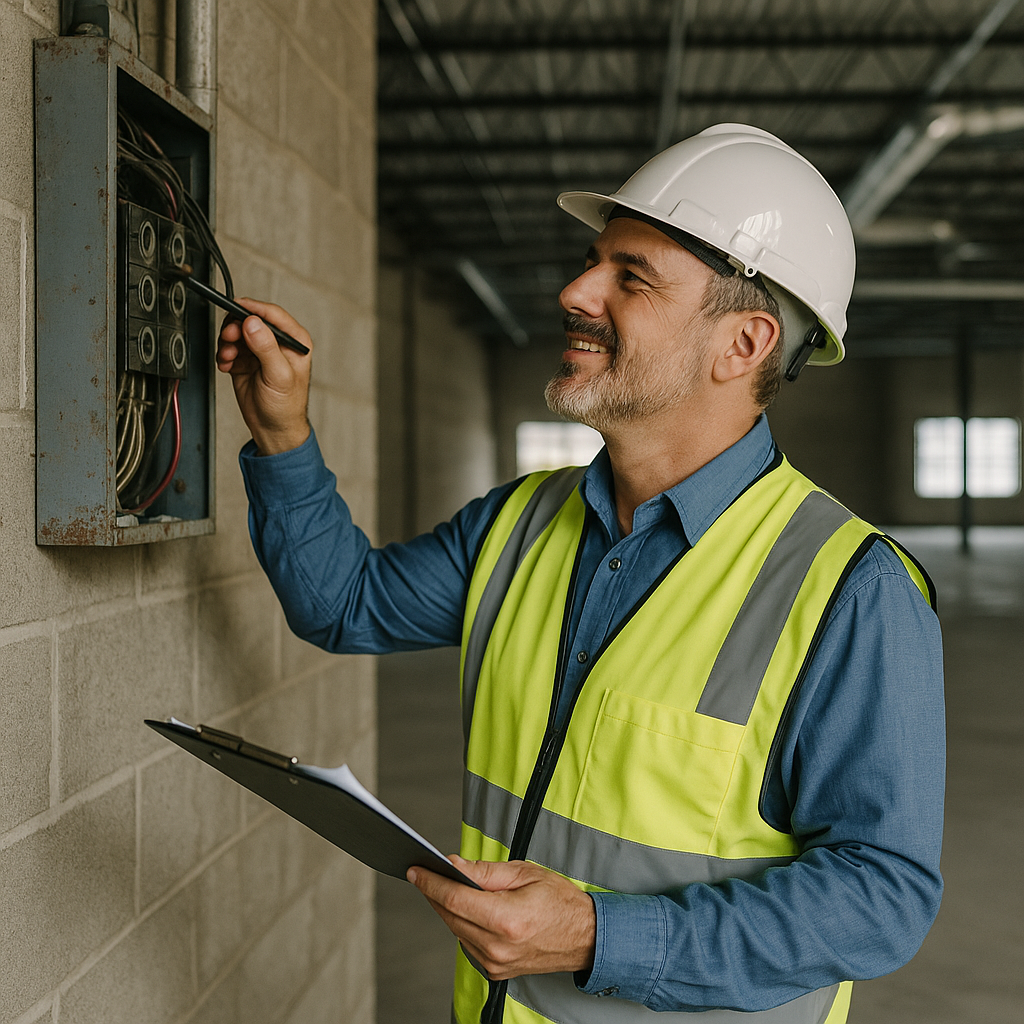
Look, I’ve been in the building game for longer than I care to admit… and let me tell you something about commercial building inspections. They’re not just a box to tick. They’re your insurance policy against buying a lemon.
## The Nuts and Bolts – What We Actually Look At
When we rock up to inspect a commercial property, whether it’s an office building, warehouse, retail space or industrial site – we’re looking at **everything**. And I mean everything.
First things first. The structure. We start from the ground up:
– **Foundations** – cracks, movement, water damage
– **Structural elements** – beams, columns, load-bearing walls
– **Roof structure** – trusses, rafters, any signs of sagging
You’d be surprised how many commercial buildings have foundation issues that nobody notices until it’s too late. Last week I inspected a warehouse in Brisbane where the owner had no idea half their floor was slowly sinking.
## The Building Envelope (Fancy Talk for Walls and Roof)
This is where things get interesting. Commercial buildings cop a beating from our Queensland weather. We check:
– External walls for cracks, water stains, deterioration
– Windows and doors – seals, frames, operation
– Gutters and downpipes (boring but crucial)
I once found a retail building where water had been getting in through a tiny crack for years. The damage? Let’s just say the repair bill had more zeros than a cricket scoreboard.
## The Weird and Wonderful
Commercial buildings throw up some unique challenges. **Asbestos** is still lurking in many older buildings. We identify potential asbestos-containing materials (though testing is a separate process).
**Pest activity** – termites don’t care if it’s commercial or residential. They just want to eat.
## What About Specific Building Types?
### Warehouses and Industrial
– Loading docks
– Crane rails
– Mezzanine floors
– Heavy machinery anchors
### Office Buildings
– Lift condition (visual only)
– Common areas
– Car park structures
– Tenant fit-outs
### Retail Spaces
– Shopfronts
– Cool rooms (if applicable)
– Customer facilities
## The Stuff We DON’T Do
Let’s be clear about limitations. A commercial inspection is visual. We don’t:
– Move heavy equipment or stock
– Test every power point
– Check inside walls (unless there’s an access point)
– Provide engineering calculations
– Value the property
## Why This Matters
Here’s the thing. Commercial property is big money. The problems are bigger, the repair bills are bigger… everything’s bigger. A missed defect can mean:
– Unexpected repair costs running into hundreds of thousands
– Business interruption
– Safety liability issues
– Problems with insurance
I’ve seen businesses nearly go under because they bought a building with hidden problems.
## The Report – Your Bible
After we’ve crawled through every accessible nook and cranny, you get a comprehensive report. Photos of every issue. Clear explanations. No jargon (well, we try). Priority ratings so you know what needs fixing yesterday versus what can wait.
The report becomes your roadmap. Use it for:
– Negotiating the purchase price
– Planning maintenance
– Getting quotes for repairs
– Insurance purposes
## My Two Cents
After 25+ years in this game, here’s my advice. **Never, ever buy a commercial property without a proper inspection**. I don’t care if it looks perfect. I don’t care if the seller says it’s been maintained beautifully. I don’t care if your mate who “knows buildings” had a quick look.
Get a proper inspection by someone who knows commercial buildings inside out. Someone who’s licensed, insured, and has actually built things, not just looked at them.
Commercial property can be a great investment. But only if you know what you’re buying. That’s where we come in.
*Give us a call. We’re open 7 days because property doesn’t wait for business hours. And neither do smart investors.*


0 Comments