

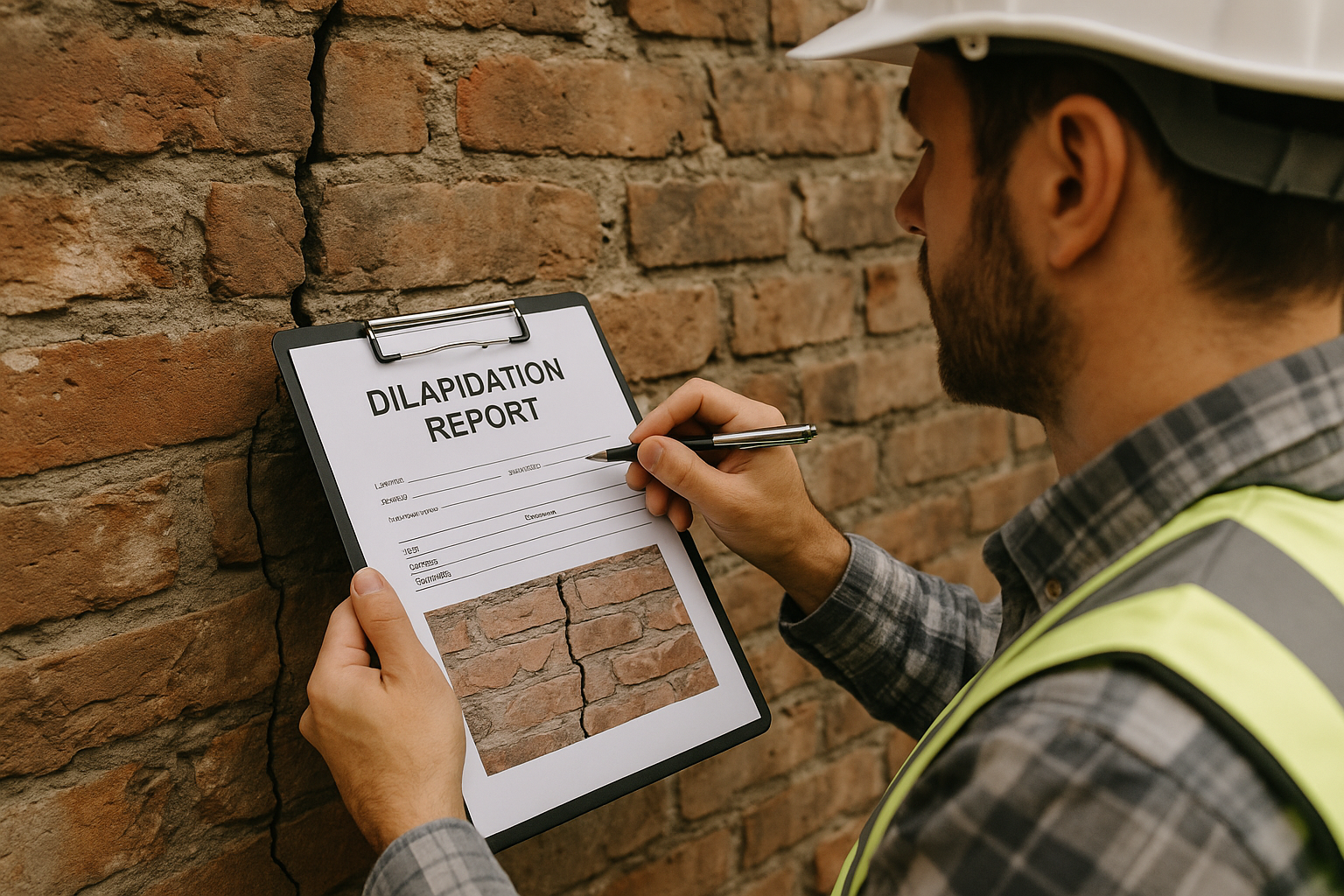
Look, I’ll be straight with you. When it comes to property and construction, there’s this document that most people don’t even know exists until they really, really need it.
And by then? It’s usually too late.
## **So What Exactly IS a Dilapidation Report?**
Think of it like this. You know how you take photos of a rental car before you drive it off the lot? Same concept. Except we’re talking about buildings. And instead of a quick phone snap, it’s a proper professional assessment.
A dilapidation report is basically a detailed snapshot – written descriptions, photographs, the whole nine yards – of what neighboring properties look like **before** any construction work starts. Then another one after.
Why? Because construction can be… messy. Things shake. Cracks appear. Sometimes where they shouldn’t.
## **Here’s Why You Actually Need One**
Let me paint you a picture.
Your neighbor starts major renovations. Or maybe YOU’RE the one building. Either way, six months later there’s a crack in someone’s wall that “definitely wasn’t there before.”
Now what?
Without a dilapidation report, it’s your word against theirs. And trust me, that’s not a fun conversation to have. I’ve seen it happen. Good neighbors become enemies. Legal battles that drag on for years. All because nobody thought to document what was there in the first place.
## **When Should You Get One?**
Honestly? **Before any major construction work.** And I mean ANY:
– Building a new house
– Major renovations
– Demolition work
– Even significant landscaping that involves heavy machinery
Here in Brisbane especially, with all the development happening… mate, you’d be crazy not to get one.
## **What Actually Goes Into These Reports?**
A proper dilapidation inspection isn’t just some bloke with a camera walking around for five minutes. When our team at Inspection Central does one, we’re looking at:
– **Structural elements** – walls, foundations, the bones of the building
– **Existing cracks or damage** – and yes, we measure them
– **The condition of driveways, paths, fences**
– **Even the landscaping** – because believe it or not, construction can mess with tree roots and garden beds
Every single defect, mark, crack, or issue gets photographed and documented. Date stamped. The works.
## **But Here’s the Real Kicker**
The best time to get a dilapidation report? When you don’t think you need one.
Seriously.
Because once construction starts and something goes wrong, trying to prove what was already there versus what’s new damage… good luck with that.
I’ve been in this industry for over 25 years. Seen every dispute you can imagine. And the ones that get resolved quickly and fairly? They’re the ones with proper documentation.
## **So What Happens If You Skip It?**
Look, maybe nothing happens. Maybe your construction goes perfectly, nobody complains, everyone’s happy.
Or maybe your neighbor claims your excavation work cracked their pool. And now you’re looking at a $50,000 repair bill. With no way to prove that crack was already there.
Your choice.
## **The Bottom Line**
A dilapidation report isn’t sexy. It’s not exciting. But neither is insurance until your house burns down.
It’s protection. Pure and simple.
For builders, it protects you from false claims. For property owners, it protects you from damage you didn’t cause. For everyone involved, it keeps things honest.
And in my experience? The people who skip dilapidation reports are the same ones calling lawyers six months later.
Don’t be those people.
—
*Look, if you’re in Brisbane and you’ve got construction coming up – whether you’re building or your neighbor is – give us a call. We’re open 7 days, early morning to late. Because we know construction doesn’t wait for business hours. And neither should protecting your property.*
*The peace of mind alone is worth it. Trust me on this one.*



0 Comments